Math
Understand the concepts, work through problems, and make sense of the steps.
Math, reading & writing tutoring for grades K–8, online and in person.
15 minutes
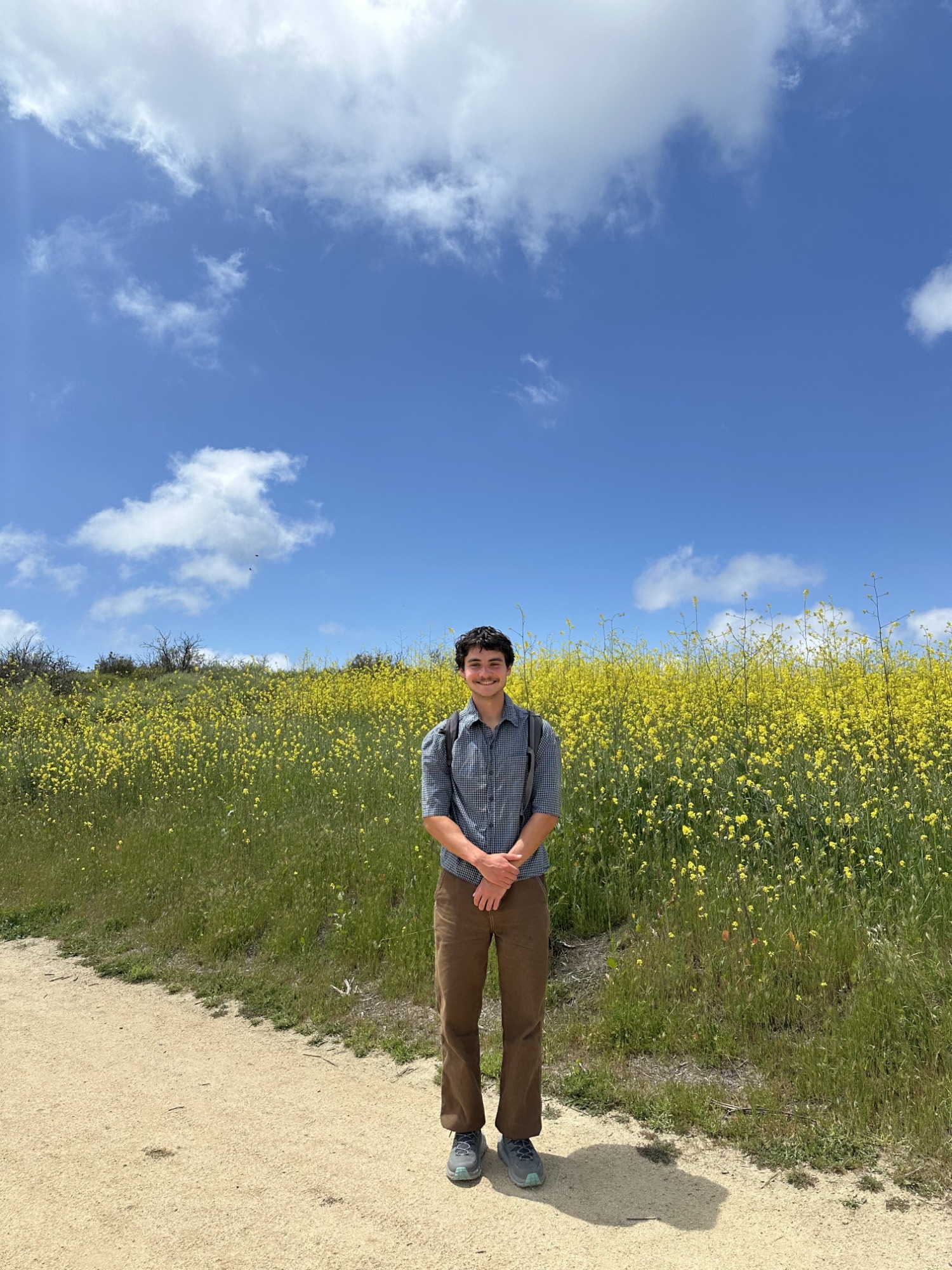
Hey! Thanks for clicking! I hope we get a chance to connect, but here’s a little about me in the meantime. I grew up in Roseville, a suburb of Sacramento, and moved to Southern California to attend UC Irvine. I graduated with a degree in Business Administration and an emphasis in marketing. While I was there, I met my girlfriend, who grew up in Brooklyn and wanted to move back. It didn’t take much convincing. A year and change later, I couldn’t be happier here.
Lately, my hobbies include Ultimate Frisbee (maybe the greatest sport invented), reading, app development, and biking. All This Could Be Different is my favorite read this year, and recently I’ve been loving the Dungeon Crawler Carl series. I’m also working on a platform for discovering books, with the goal of eventually including other forms of writing. And I’ve ridden 1,300 miles on Citi Bikes this year!
I’m a pretty analytical person and I believe I'm a better educator for it. I like having the details and the context behind them, and I find vague explanations frustrating. That carries over into how I try and communicate, explaining my reasoning and giving people enough context to follow it. I love explaining something I know well, especially when we can get specific about what isn’t making sense and work through it together.
The support changes with your child’s understanding. Later sessions reconnect with earlier learning before extending it.
I’ll use questions and short tasks to understand what your child already knows and where they need help.
Support depends on what your child understands and what’s getting in the way.
We plan, try and check an approach together, with less help as understanding grows.
Your child works through a similar task on their own, explains their approach and checks their work. If they get stuck, we return to the support they need.
A record of what your child can explain and use helps us decide what to revisit.
Your child recalls the idea and tries a fresh example without help.
We focus on the gap, with support as needed, before your child tries a fresh example independently.
That understanding becomes the starting point for a new idea or challenge.
We bring earlier learning into new work and use it in different contexts when your child is ready.
We review what’s remembered, used in different tasks and done with less help. Parent input can help shape what comes next.
This is a flexible structure, not a fixed sequence. I’ll check understanding throughout and adjust the order, pace and amount of support as we go. It draws on guidance about explicit instruction, supported exploration, self-regulation and spaced practice from the Australian Education Research Organisation, the Education Endowment Foundation and the U.S. Institute of Education Sciences.
I’m always open to feedback, advice, and detailed information about what helps your child learn. Tell me what’s worked, what hasn’t, and anything I should keep in mind so we can find the approach that works best for them.
Understand the concepts, work through problems, and make sense of the steps.
We’ll start with questions or a short task to see how your child approaches a problem. Their responses help me choose whether to explore an idea, offer a question or hint, demonstrate a step or practise together. As they become more secure, they’ll choose an approach, explain their reasoning and check their answer with less help.
These are examples of how we might work. Your child’s responses will guide the task, pace and support throughout.
These are useful starting points. Your child’s current skills, rather than their grade alone, guide the lesson.
Number sense and early calculations.
We’ll work on quantity, place value, addition and subtraction. Counters, ten-frames and drawings can help your child connect an equation to what each number represents.
Operations, fractions and their connections.
We’ll work on multiplication, division, fractions, decimals and word problems. Arrays, fraction strips and number lines will help us connect calculations to the quantities and relationships involved.
Reasoning with growing independence.
We’ll work on rational numbers, ratios, expressions, equations and relevant geometry. Your child will choose a useful diagram, table or equation, explain the steps and compare methods once the basics are secure.
WWC rates systematic instruction, mathematical language, representations, number lines and word-problem instruction strongly for elementary intervention. Its grades 4–8 guide also strongly supports visual representations and monitoring the problem-solving process. Algebra-specific recommendations have more mixed evidence ratings; the broader mastery-learning evidence is limited.
Evidence ratings apply to the practices and students studied. A “minimal” rating means the guide’s evidence threshold was not met; it doesn’t mean a practice was shown to be ineffective. These guides inform the approach, rather than predict an individual result.
Identify what is getting in the way—reading the words, reading fluently, or understanding the text.
Listening to your child read and discussing the text helps me find the skill that needs attention: reading the words, understanding the language or both. We’ll adjust the teaching and practice as we go, helping them notice difficulty and choose what to try next. Later sessions will revisit taught skills using new words and passages to see what carries over with less help.
These are examples of how we might work. Your child’s responses will guide the task, pace and support throughout.
These are useful starting points. Your child’s current skills, rather than their grade alone, guide the lesson.
Connecting sounds, print and meaning.
We’ll connect sound awareness to letters, blending, spelling and short texts using familiar patterns. Stories, read-alouds and conversation will help your child build vocabulary and comprehension from the beginning.
Fluent reading and understanding the text.
We’ll work on longer words, vocabulary, fluent reading and understanding paragraphs. If reading becomes difficult, I’ll check whether the obstacle is decoding the words or making sense of them, then target that skill.
Understanding more demanding texts.
We’ll work on complex words, background knowledge, inference and evidence. Together, we’ll unpack unfamiliar language, summarize sections and support interpretations with the text, while addressing earlier word-reading gaps when needed.
If your child understands a paragraph read aloud but struggles to read the words, word reading may need attention. If they read accurately but struggle to explain it, we’ll look more closely at understanding the language. These observations guide teaching; they aren’t a diagnosis.
WWC gives strong ratings to sound–letter and decoding instruction in K–3. For struggling readers in grades 4–9, it strongly supports longer-word decoding, fluency work and a bundle of comprehension practices. Supported practice with challenging texts receives a moderate rating. Phonics research supports word-reading outcomes more clearly than treating phonics alone as a complete comprehension intervention.
Evidence ratings apply to the practices and students studied. A “minimal” rating means the guide’s evidence threshold was not met; it doesn’t mean a practice was shown to be ineffective. These guides inform the approach, rather than predict an individual result.
Learn manageable ways to organise ideas, build clear sentences and paragraphs, and revise.
We’ll start with what your child wants to communicate and how they currently approach writing. I’ll use their ideas, plans or drafts to identify what would help next—a question, a useful model, a demonstration or writing together. As they gain control, they’ll take more responsibility for planning, checking and revising their work.
These are examples of how we might work. Your child’s responses will guide the task, pace and support throughout.
These are useful starting points. Your child’s current skills, rather than their grade alone, guide the lesson.
From ideas to sentences.
Your child’s own ideas will stay at the centre as we practise saying thoughts aloud, forming letters, spelling and composing sentences. A modelled sentence can help them get started, and we’ll reread their writing together to check its meaning.
Developing clear paragraphs.
We’ll work on planning, organizing, elaborating, revising and editing. A short model or shared planning can help when needed. Your child will draft, check and improve a specific feature, such as an explanation that a reader needs.
Purpose, structure and evidence.
We’ll work on audience, explanation, argument, evidence and cohesion. Your child will connect claims to evidence and reasoning, organize the piece and develop increasingly independent revision habits.
WWC rates teaching the writing process for different purposes strongly in elementary grades; handwriting, spelling and sentence construction receive a moderate rating. Its secondary guide strongly supports explicit strategies through modeling, practice and reflection. K–3 and grades 6–12 meta-analyses support combining useful practices. The WWC’s specific 2017 learning-disability review rated SRSD writing effects “potentially positive,” rather than universally strong.
Evidence ratings apply to the practices and students studied. A “minimal” rating means the guide’s evidence threshold was not met; it doesn’t mean a practice was shown to be ineffective. These guides inform the approach, rather than predict an individual result.
60, 90, 120-minute sessions available. Totals below show a 60-minute lesson, rounded to the nearest dollar.
50% off$60/hour
$30/hour
$30 per lesson
$150 total (5 lessons)
/hour
$60 total
1 session: $60/hour · 4 sessions: $57/hour · 8 sessions: $54/hour · 16 sessions: $50/hour
Bundles apply after your first 5 one-on-one lessons.
The introductory rate applies to each student’s first 5 one-on-one lessons. Sessions are charged at the hourly rate, prorated for your chosen duration and rounded to the nearest dollar.
Bundle rates don’t combine with introductory discounts. Bundle totals cover the selected number of lessons at the selected length.
Over the past three years, I’ve taught and supported children in classrooms. One-on-one tutoring is newer to me, and I want to be honest about that. That’s why the first five lessons are half price.
Book one at a time, with no obligation to take all five or continue. A good fit for your child, for you as their parent or guardian, and for me helps us work better together.
Per student
40% off$45/hour
$27/hour
$27 per lesson
$135 total (5 lessons)
40% off$40/hour
$24/hour
$24 per lesson
$120 total (5 lessons)
40% off$35/hour
$21/hour
$21 per lesson
$105 total (5 lessons)
40% off$30/hour
$18/hour
$18 per lesson
$90 total (5 lessons)
$45/hour
$45 total
$40/hour
$40 total
$35/hour
$35 total
$30/hour
$30 total
| Students | First 5 · 40% off | Afterward |
|---|---|---|
| 2 | $27/hr $27 per lesson $135 total (5 lessons) | $45/hr $45 total |
| 3 | $24/hr $24 per lesson $120 total (5 lessons) | $40/hr $40 total |
| 4 | $21/hr $21 per lesson $105 total (5 lessons) | $35/hr $35 total |
| 5–8 | $18/hr $18 per lesson $90 total (5 lessons) | $30/hr $30 total |
Groups depend on availability and students working at similar subject levels.
For now, you and the other families would need to put the group together. I’m not matching students into groups yet.
Group introductory rates apply to each student’s first 5 group lessons. They don’t combine with one-on-one discounts or bundles.
Tell me the grade, subject, and what’s been difficult. We can talk about next steps and whether online or in-person tutoring works for you.
Free · 15-minute intro call · Google Meet
Monday–Friday, 9 a.m.–7 p.m. Eastern
Prefer email? nathaniel.leslie2408@gmail.com